

Machine vision and AI
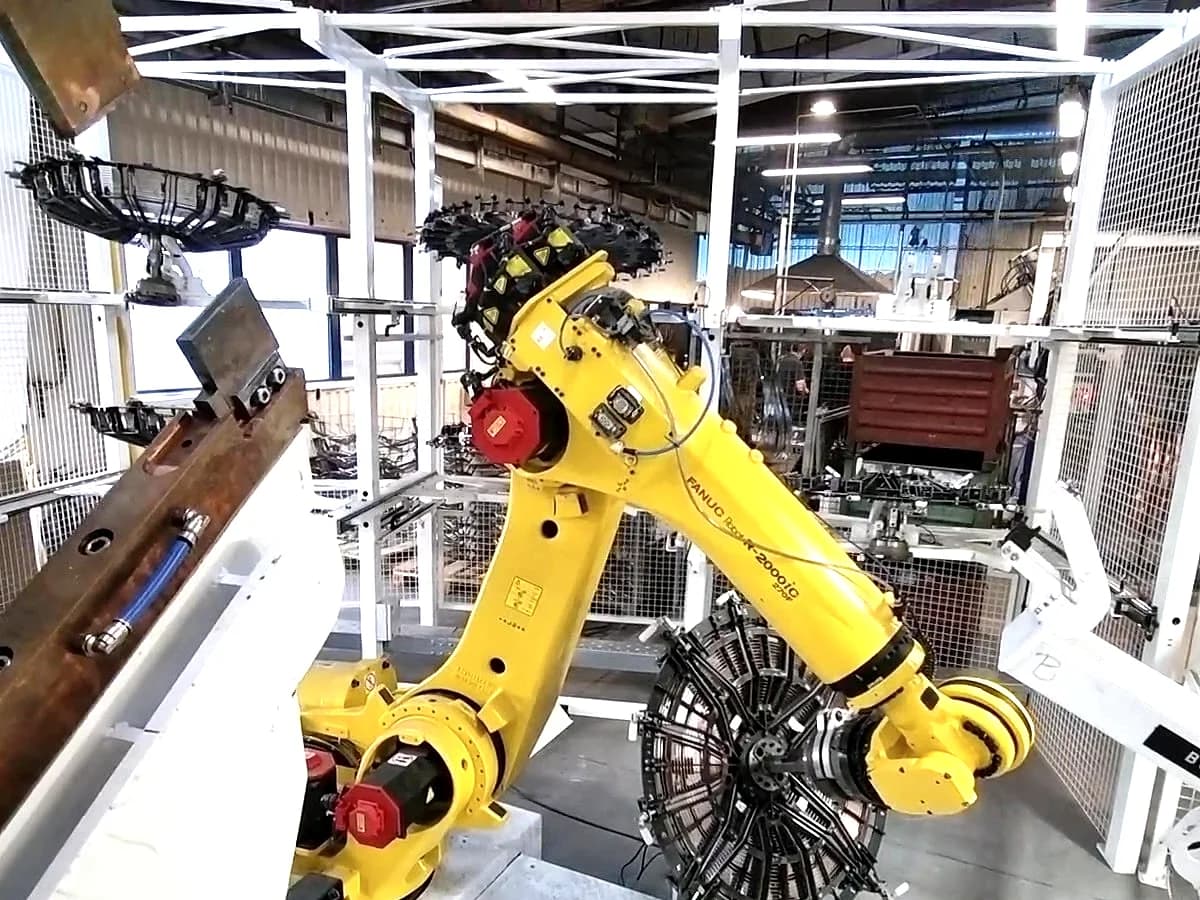
Our solutions let robots pick parts that arrive randomly oriented or stacked on top of each other, from a bin or a conveyor — whatever their shape.
Request a quote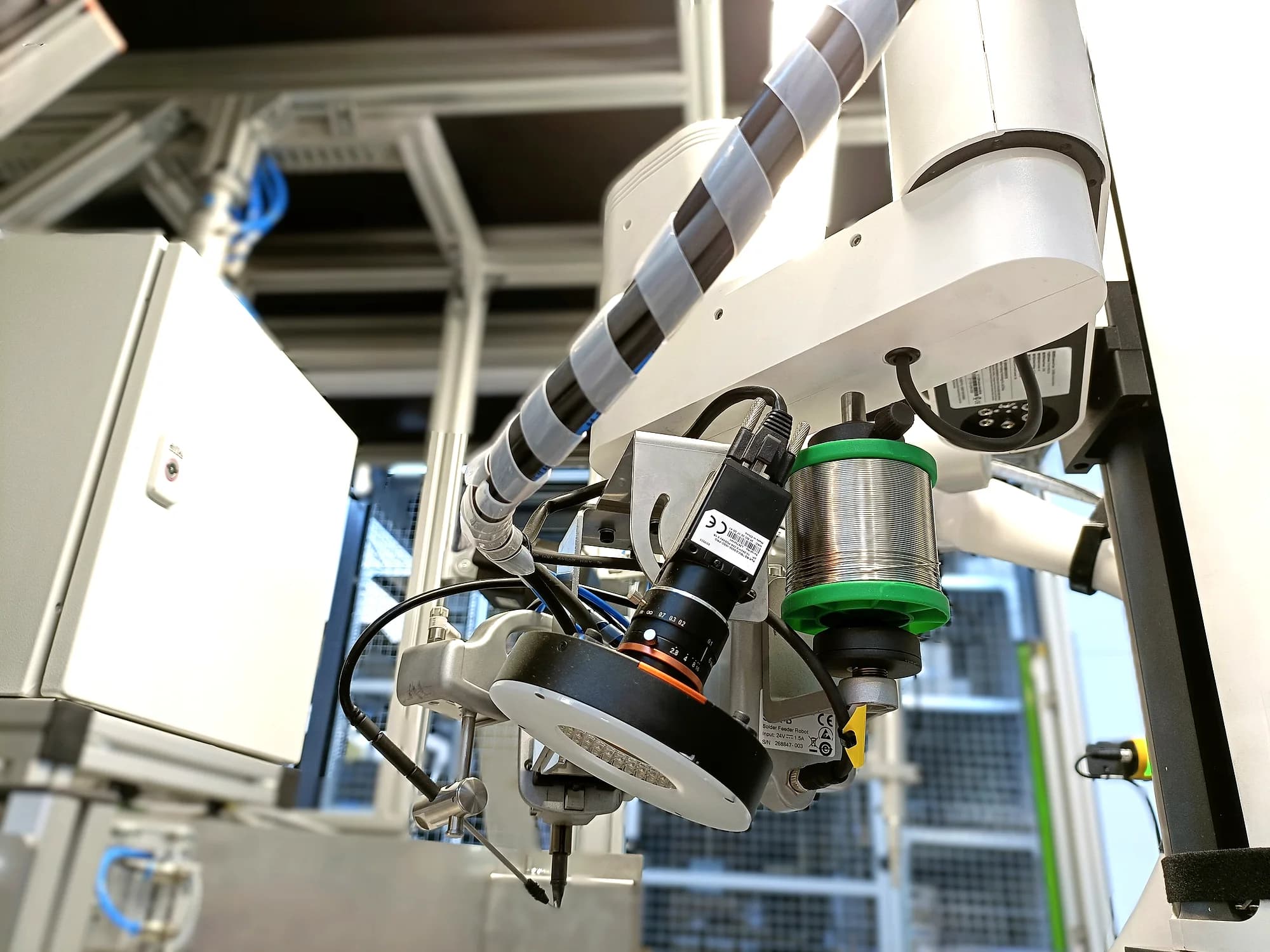
We choose the technology to suit the task, not the other way round. We integrate 2D and 3D camera systems and smart sensors from Keyence, Cognex, wenglor and other leading manufacturers into robot cells and special-purpose machines – together with lighting, robot and PLC communication and reject handling.
Where rule-based image processing reaches its limits – shiny or deformable parts, irregular defects, many product variants – ROBOMIND Systems, the Robot-Service subsidiary set up for artificial intelligence and software development, builds its own AI software: neural-network segmentation and classification, edge AI running in the cell (NVIDIA Jetson), and its own data collection, labelling and training workflow.
Recognition alone is not enough: the robot has to pick the part without colliding with the bin or the neighbouring part. That is why we design point-cloud matching, grasp selection and path planning together with the cell – and prove feasibility with a test on sample parts.
Typical tasks
Bin picking and machine loading
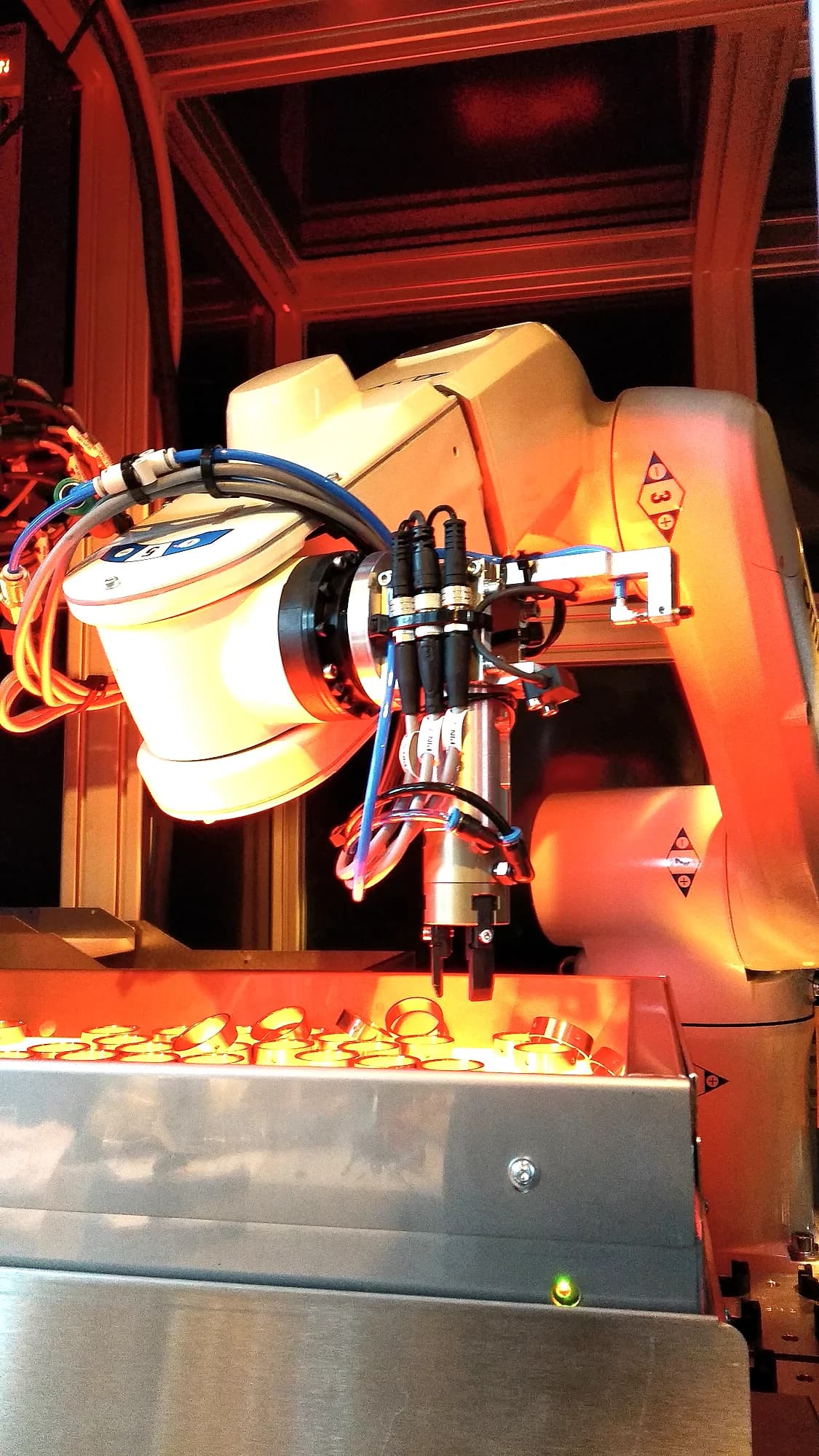
Recognising parts that arrive in bulk, picking them from the bin and loading them into a production machine without collisions – with classic 3D matching or AI segmentation.
Sorting and classification
Recognising products without a fixed shape and determining their orientation and 3D position — also for food applications.
Palletising and parcel handling
Handling boxes and parcels without knowing exact dimensions in advance, even when there is no gap between them.
AI quality inspection
Segmentation, detection and classification: surface defects, scratches and features inspected by a learning system.
Conveyor picking
Picking from a moving conveyor using ToF and laser 3D scanners, for a wide variety of product shapes.
In practice
Related references
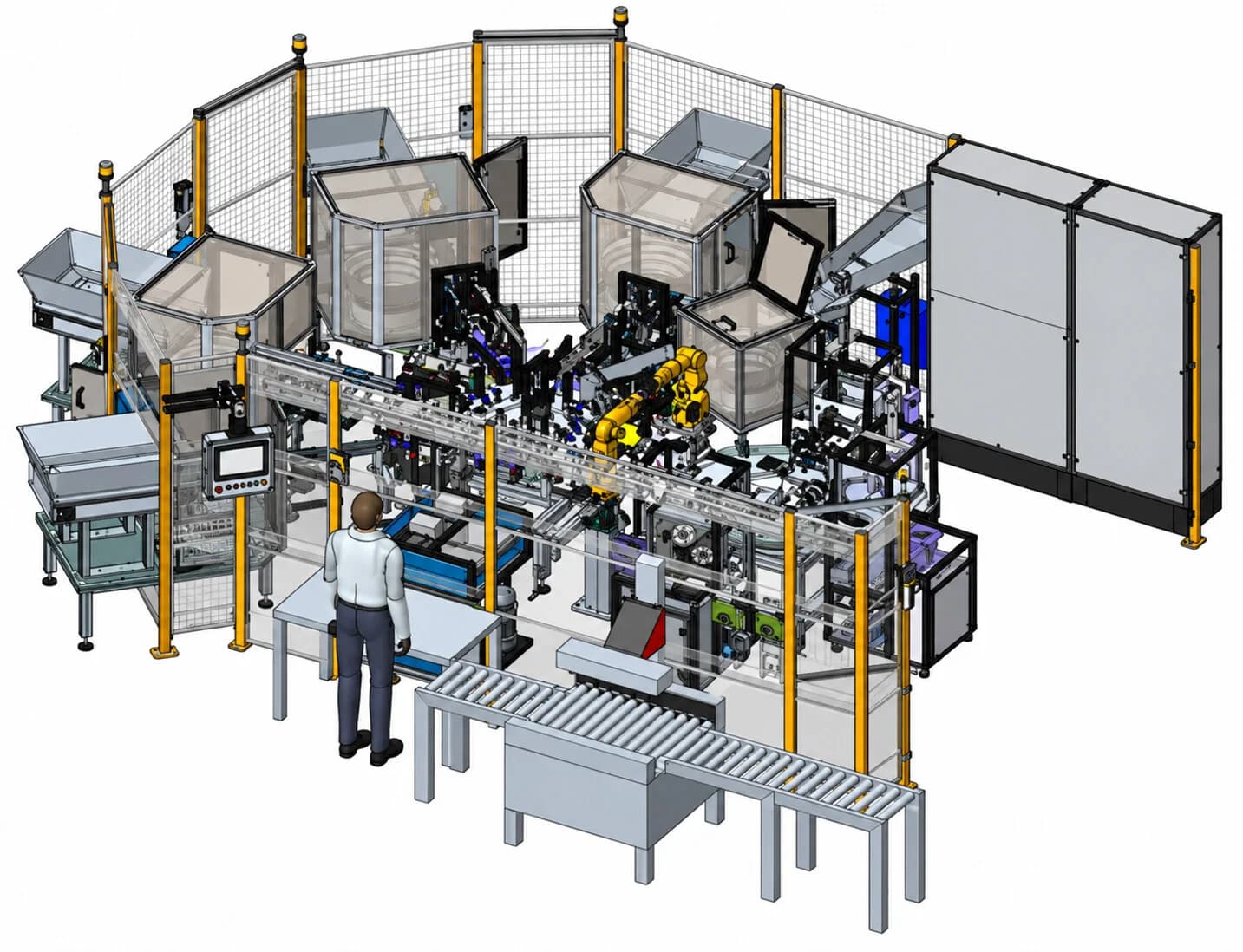 Food-related productionSpecial-purpose machine for assembling candy dispensersAssembly designed for a cycle time of 2.5 seconds per part, with in-machine spring making and ROBOMIND AI camera inspection. The spring-making modules can be undocked, supporting continued production while raw material is replenished.View reference
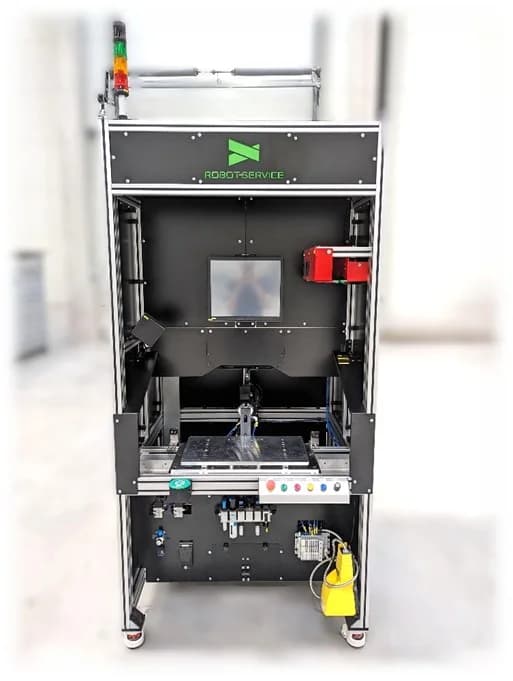
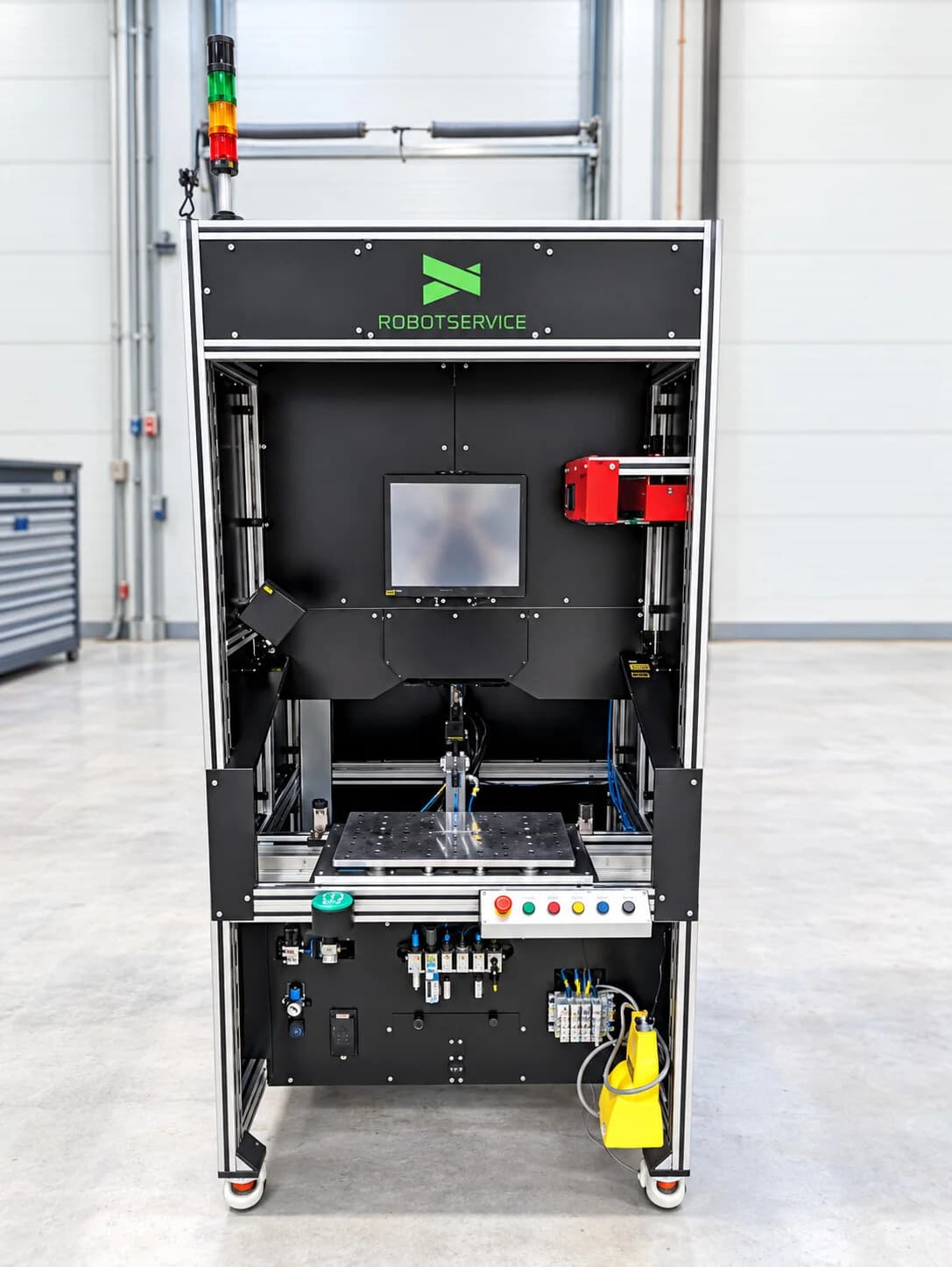 AutomotiveCamera-based EOL testerManually loaded end-of-line inspection station with a Keyence camera and a Siemens PLC. The system checks dimensions and product features and inspects for surface scratches.View reference
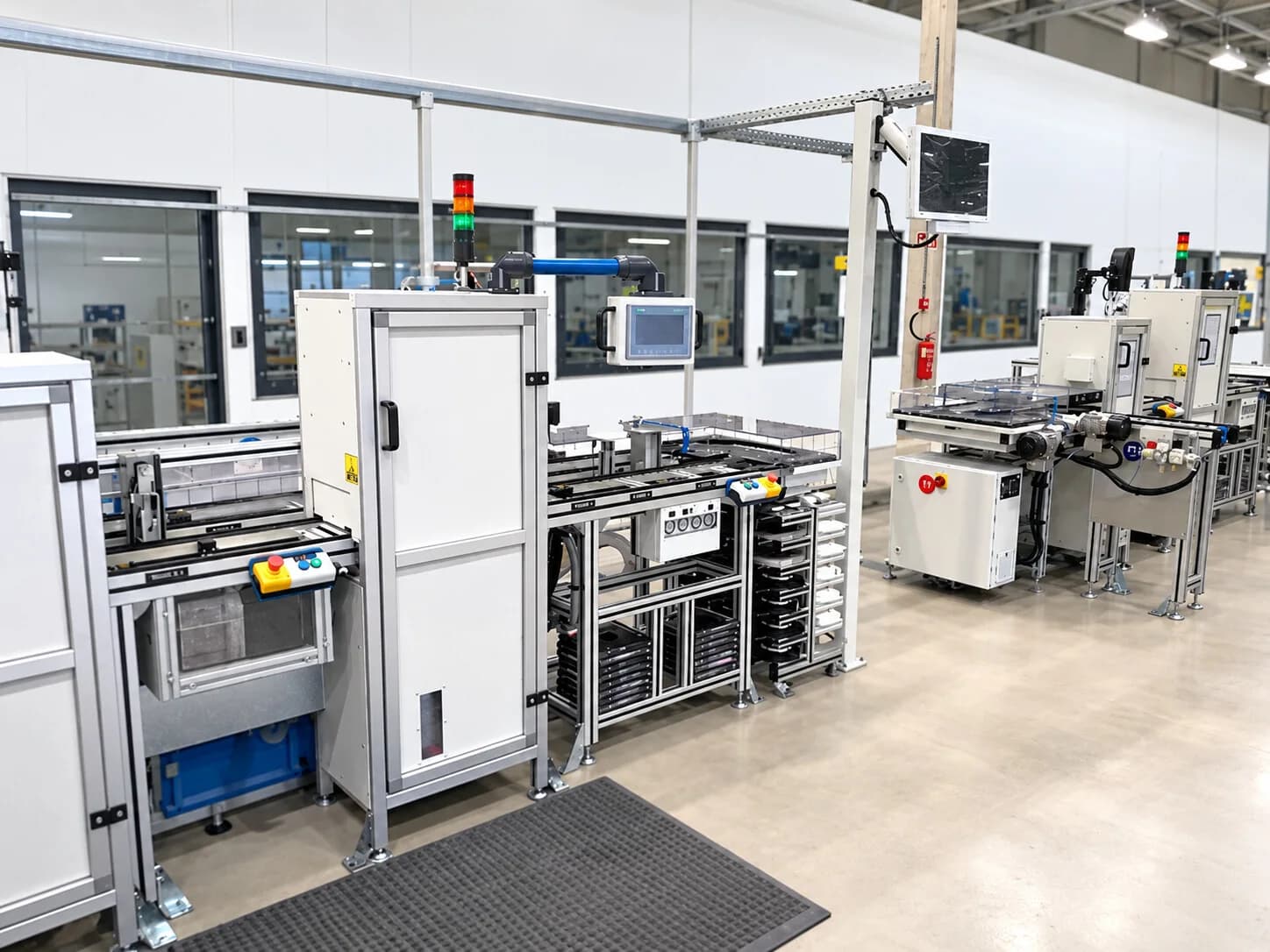 AutomotiveSurface coating line with inline inspectionAutomated surface coating line with pallet-based product transport, precision spray technology and inline surface inspection covering every part.View reference
More solutions
Do you have a similar task?
Send us your specification or a short description of the task — our engineers will get back to you.