

Plastics
AI-based inspection of spring insertion on a special-purpose assembly machine
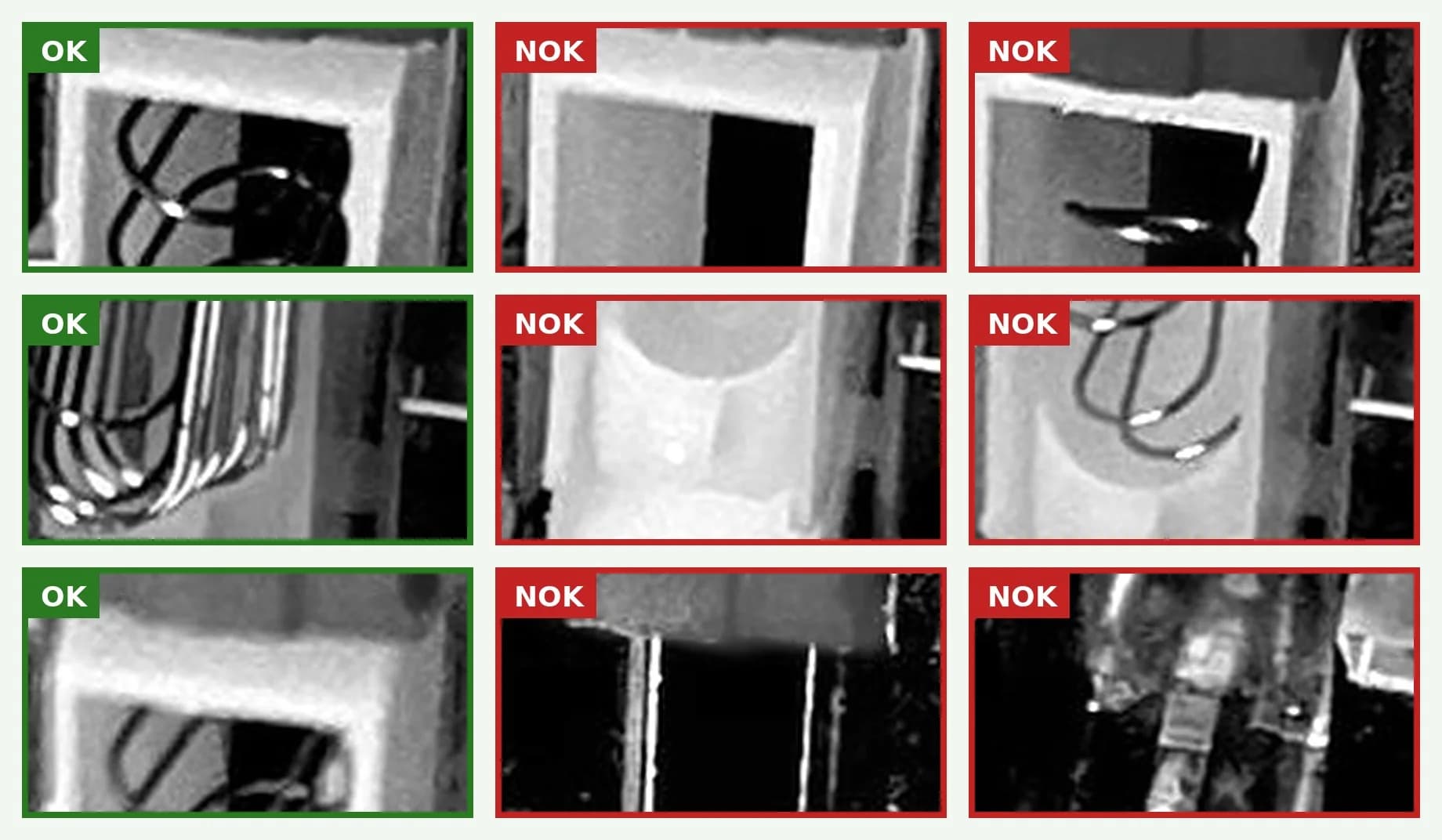
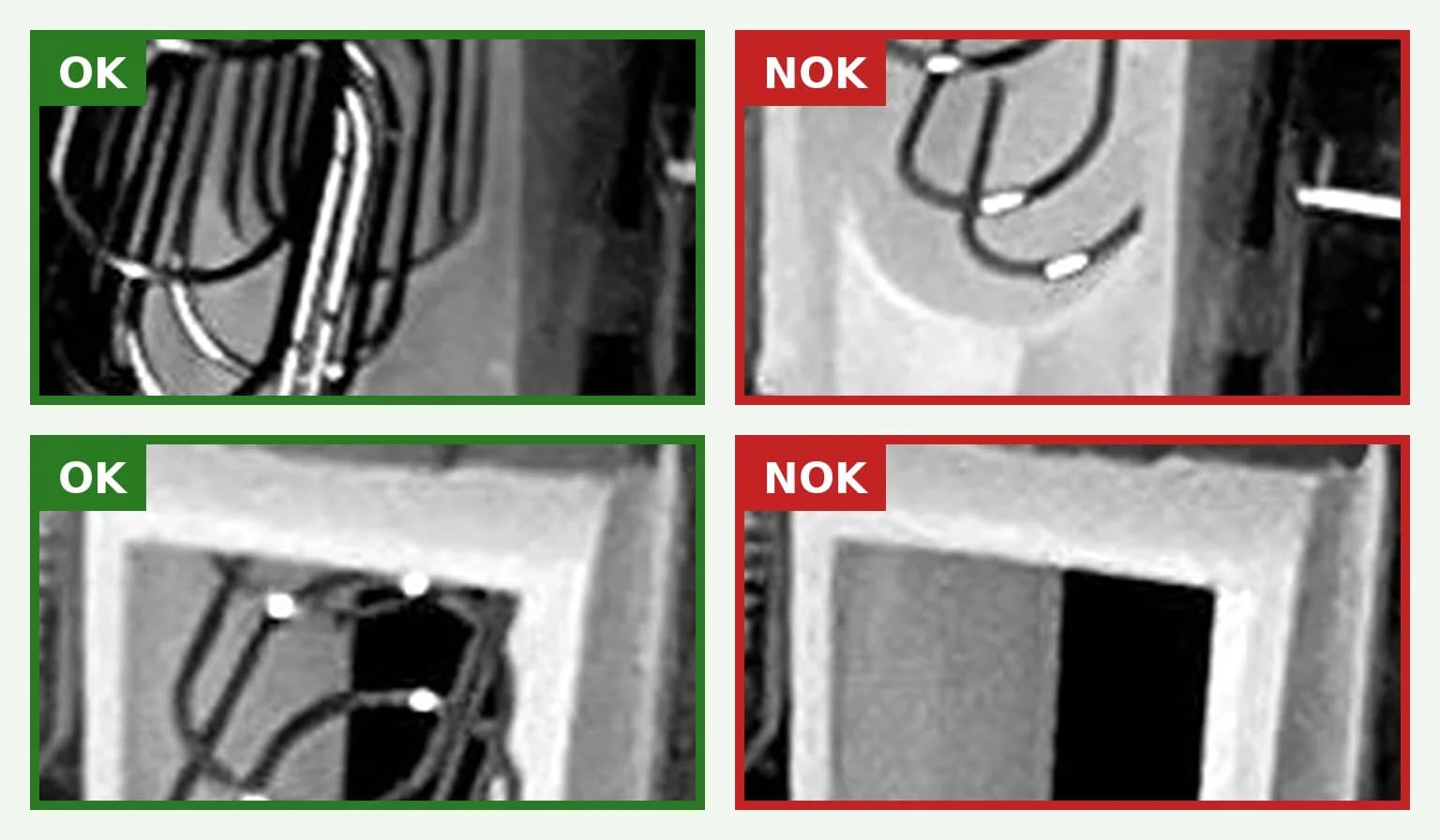
On a special-purpose machine assembling a plastic dispenser magazine, the inserted spring is checked at both ends by camera-based deep-learning image classification: if the spring is missing or incorrectly seated, or the housing is missing, the part is NOK.
Task and implementation
On the special-purpose dispenser magazine assembly machine of a plastics industry partner, the position of the spring automatically inserted into the housing had to be checked. The defects – a missing spring, a coil that has slipped out of place or caught on the edge of the housing, a missing housing – cannot be reliably distinguished with rule-based image processing because of the transparent plastic housing, the reflective wire and the varying lighting.
On the image from the machine's camera, the ROBOMIND Systems AI Vision system evaluates three inspection zones: the entire housing as well as the lower and upper ends of the spring. For each zone, a ResNet-18-based image classifier decides between OK, incorrect spring position, missing spring, missing housing and non-evaluable image, with a separate confidence threshold for each class. The part is OK only if all three zones are OK; every decision is recorded together with the original and the annotated image as well as the zone crops, and can be exported to a spreadsheet.
The training set was built from images taken on the machine using in-house cropping and labelling tools, and the model was retrained in several rounds, extended with new defect cases. In August 2026 we validated the system on the machine with production parts. The special-purpose assembly machine was built by Robot-Service, the camera-based AI inspection and the training workflow were provided by ROBOMIND Systems.
By defect type, not just OK/NOK
The classifier not only separates good parts from bad ones but also names the defect – missing spring, incorrect spring position or missing housing – so the cause of the reject is immediately visible at the machine, and the distribution of defects can be traced back from the results table.
Technology
- ROBOMIND AI Vision system
- ResNet-18 image classifier, three inspection zones
- Classes by defect type, per-class threshold
- Basler industrial camera
- OK/NOK decision per part
- Saving of original, annotated and zone images
- Spreadsheet export
- In-house cropping, labelling and training tools
How a machine like this is built
From concept through FAT to final handover, every step happens in-house.
The full processRelated references
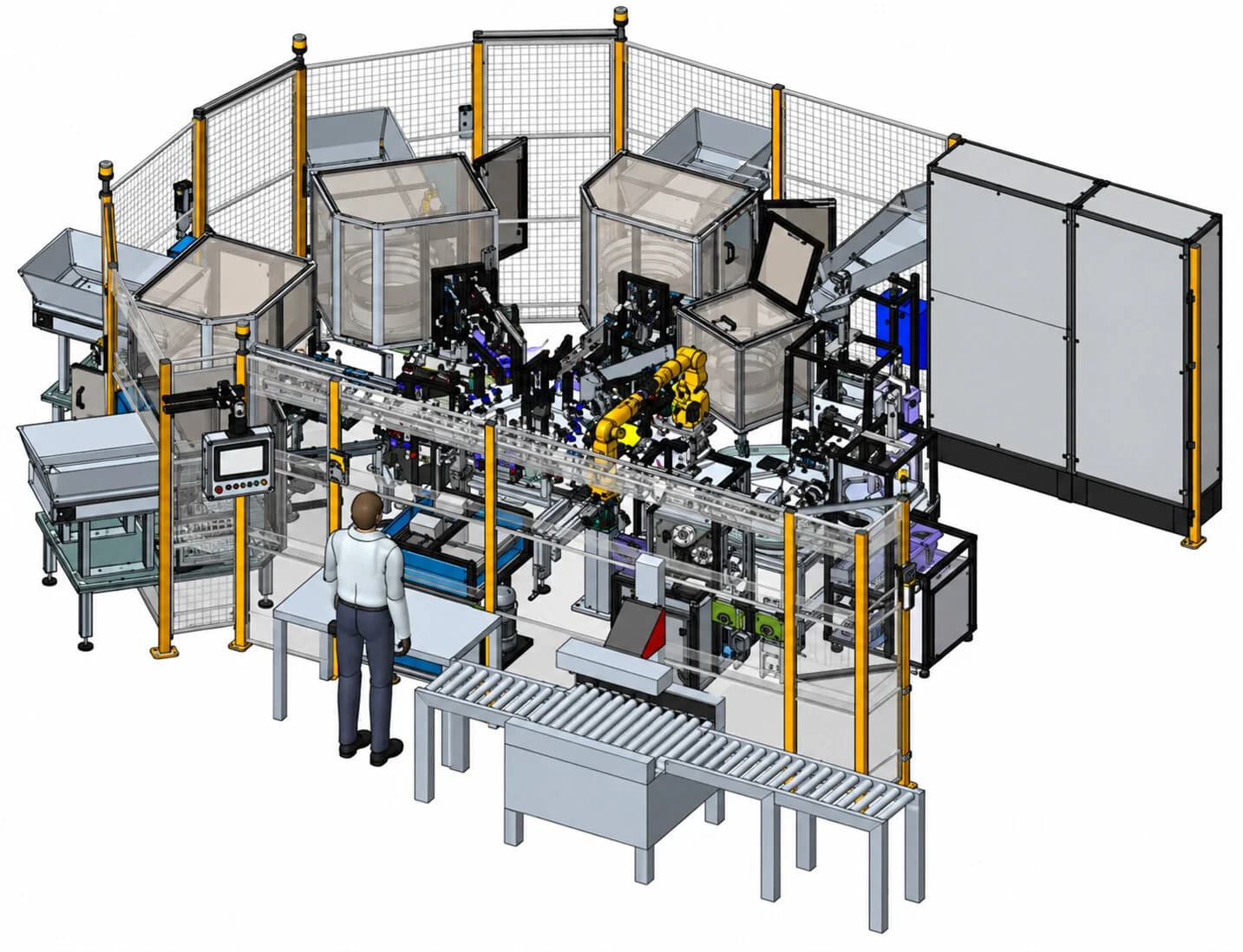 Food-related productionSpecial-purpose machine for assembling candy dispensersAssembly designed for a cycle time of 2.5 seconds per part, with in-machine spring making and ROBOMIND AI camera inspection. The spring-making modules can be undocked, supporting continued production while raw material is replenished.View reference
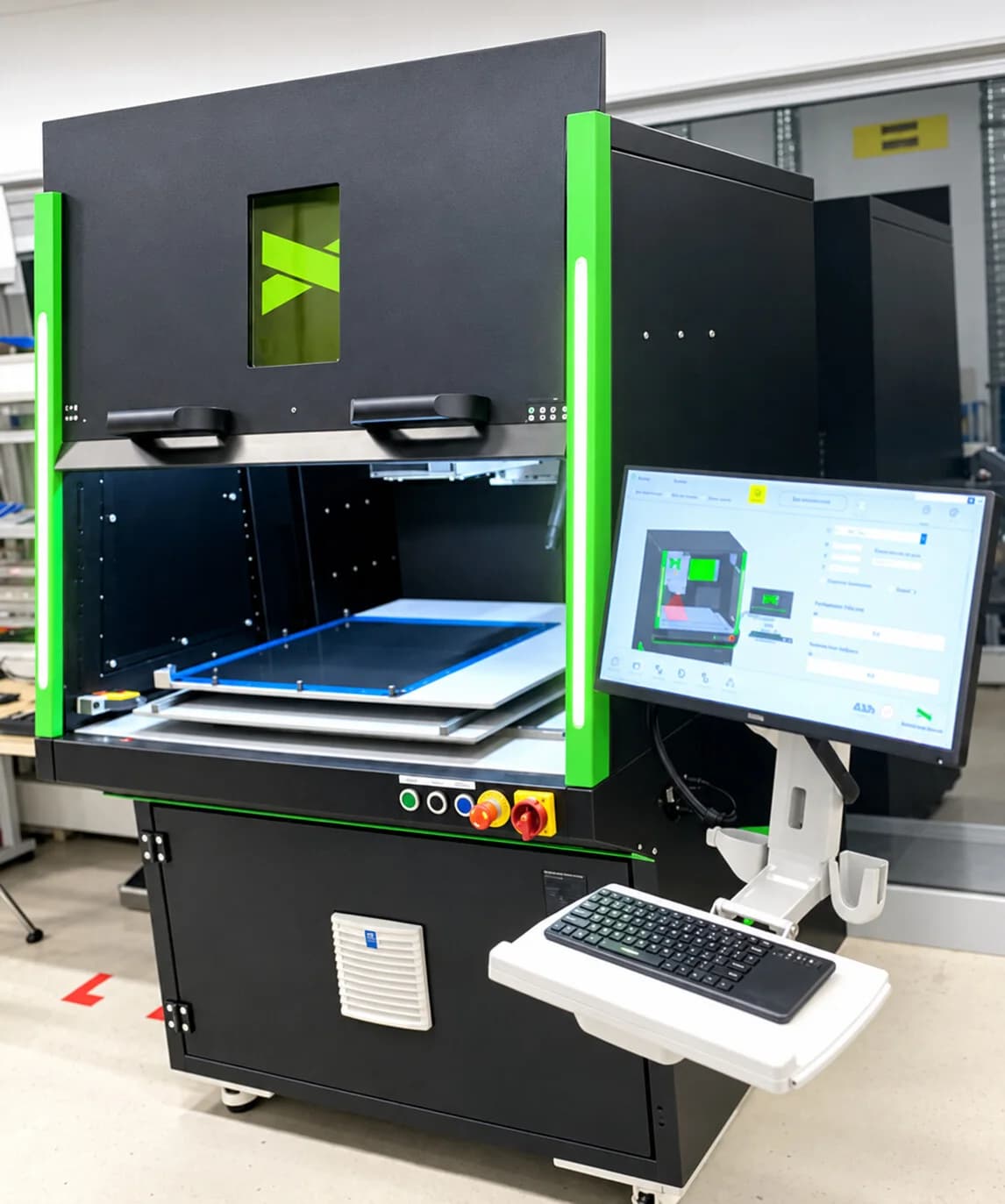 Electronics manufacturingCustom laser engraving machineWe adapted our standard laser station to a custom electronics manufacturing task. The machine uses a Keyence laser, a Beckhoff PLC and servo drives.View reference
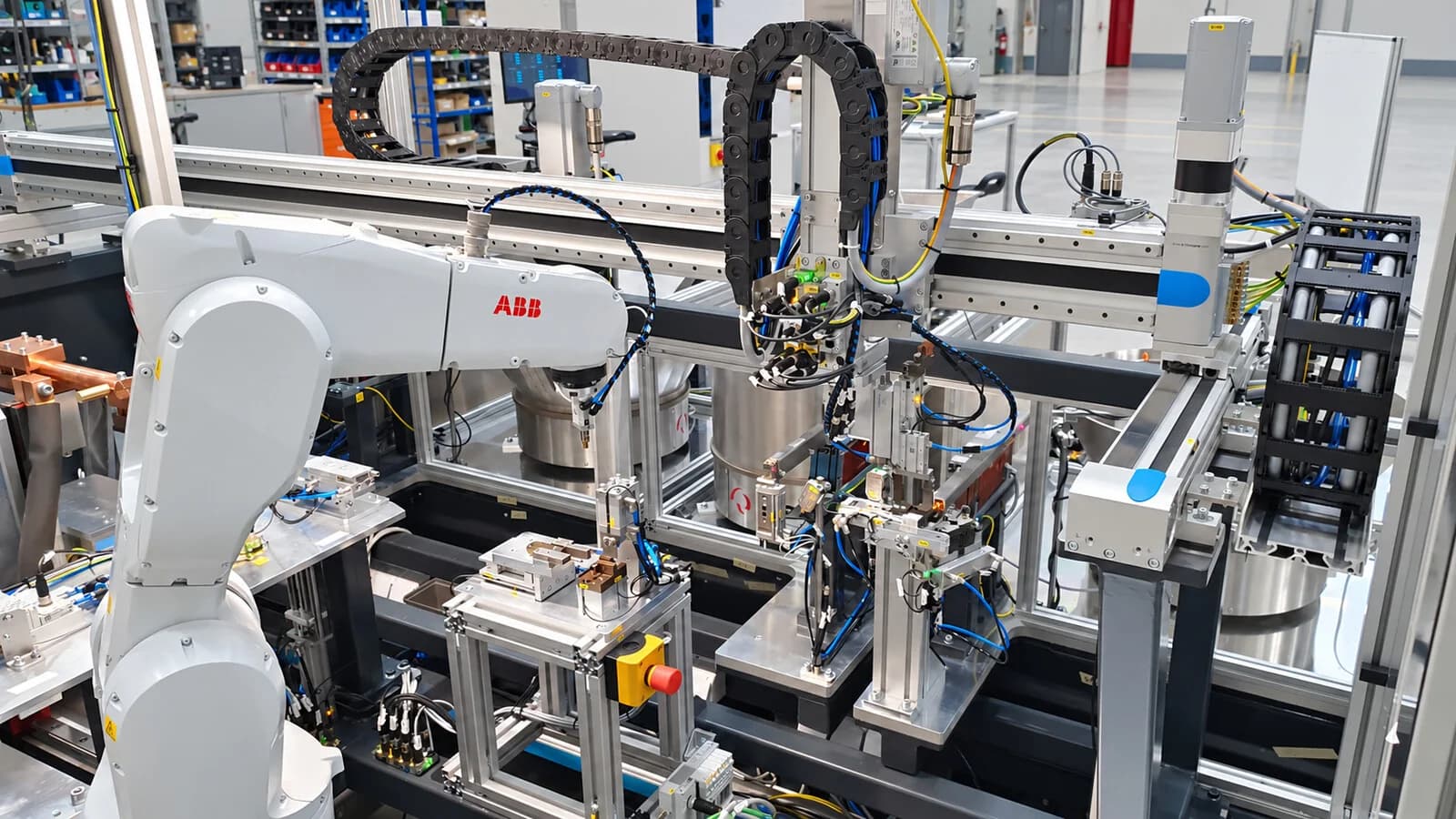 AssemblyComplex robotic assembly cellCompact assembly cell with an ABB robot, welding and orbital riveting. The project aimed at one-person operation of a five-person process, taking on-site transport constraints into account.View reference
Do you have a similar task?
Send us your specification or a short description of the task — our engineers will get back to you.